

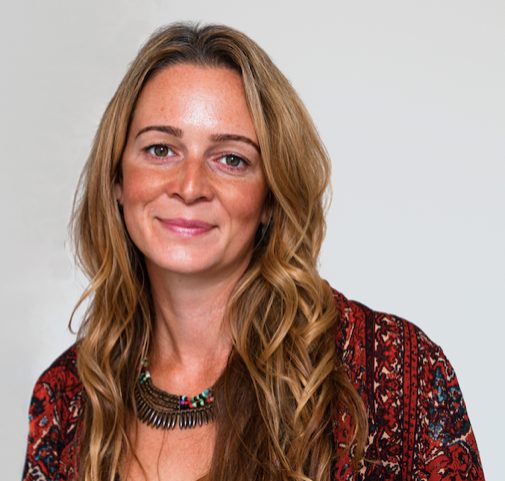
When Emma Stokes left university in 2012, she had no intention of becoming a freelancer. The idea of working alone terrified her but thirteen years later, she’s not only built a successful design practice but also created Studio Simple, a coworking space that has become a lifeline for creative freelancers in her Surrey community.
Emma is here to tell us that whilst independence is liberating, isolation can be crippling, but the answer might be more straightforward than you think.
The accidental freelancer
Emma’s path to freelancing began with rejection from traditional agencies. After completing internships at prestigious firms like Pentagram, she found herself frustrated by bureaucracy and the way junior staff were pushed into corners. “You spend a lot of time just sitting in a corner, unless you are really pushy,” she reflects.
When the 2012 recession hit and traditional jobs became scarce, an unexpected opportunity arose. A former account director remembered her work and connected her with a designer who needed help, and what started as a coffee chat became Emma’s first freelance role.
“I walked in and was just 100% me,” Emma recalls. “She said, ‘I really like you, would you consider coming and working for me freelance?’ Authenticity became the foundation of her freelance career, but working from home presented new challenges.
Isolation station
For years, Emma thrived on word-of-mouth recommendations and strong client relationships. However, working from her flat in London, she began to feel cut off from the creative community.
“I hadn’t seen anyone all day for about three weeks. I was only speaking to people when they came home from work,” she remembers. This isolation led her to teaching at design schools like Shillington, purely for human contact.
The problem intensified when she became a mother. “The baby’s there, the washing’s there, the husband’s there. Suddenly, all the stuff that didn’t used to distract me because I had a room in the house. That room is now the baby’s room. I just couldn’t focus.”
Making the leap to a workspace
Emma’s husband suggested she find a desk outside the home. The mental shift was crucial: instead of asking, “How am I going to afford that?” she reframed it as, “I just need to earn one more day’s worth of work a month to pay for a desk.”
Two weeks after securing a desk in a local business centre, COVID hit, but rather than retreating home, Emma used the space to maintain boundaries and productivity whilst caring for her family.
The experience taught her that being around other people working was key: “Just knowing that we’re there and we’ve got to get on and do stuff because other people are working is enough.”
Building community from scratch
During the pandemic, Emma began organising Design Friends meetups in local cafes and found the response was immediate and powerful.
“I was getting a lot of eye rolls about logos being too big from my husband. I needed to find someone who doesn’t roll their eyes,” she laughs. These gatherings became support networks, especially for freelancers dealing with ADHD diagnoses, burnout recovery, and career transitions.
The format was simple: “Just come and have a moan. Just moan about whatever is going on. The minute you get it off your chest and hear that other people feel the same way, everything levels out again.”
Creating Studio Simple
When a former hairdressing salon became available on her local high street, Emma’s husband encouraged her to take the plunge. “If you don’t do it now, you’re never going to do it,” he said.
The space opened in August 2023 with a clear vision: to recreate the best parts of working in a design studio without the corporate bureaucracy. Five monthly desk memberships and three hot desks offer flexibility, while the atmosphere fosters collaboration over competition.
“I want this to feel like a design studio, so when you walk in, you feel like you’re walking into the side studio that you would anywhere else. But you’re working on your own things.”
Emma says that the space particularly attracts neurodivergent freelancers who benefit from the structured environment and the social opportunities it offers.
The coworking advantage
Studio Simple operates on a simple principle: provide camaraderie without constraints. Members can put their headphones on and work in silence, but they can also turn around and ask for advice or just chat about their day.
“Every now and again, you can turn around and be like, ‘Guys, what do you do this? Where do you get this? How do you do that?’ That part of being in a studio is the bit that everybody misses.”
Emma’s own productivity has transformed. “I think I’ve grown as a person massively since having this space. In terms of mental wellbeing and my levels of creativity, which mean that I can do my job, I think they’ve improved massively.”
Your coworking options
You don’t need to open your own space to experience these benefits. Consider these approaches:
- Traditional coworking spaces: Look beyond the corporate offerings to find spaces that match your working style and industry focus.
- Virtual coworking: Online body doubling sessions and virtual coworking groups provide accountability and community from the comfort of your own workspace.
- Industry-specific spaces: Seek out coworking environments designed for your particular field, where you’ll find relevant expertise and potential collaborators.
- Community memberships: Communities like Being Freelance, Freelancer Magazine and Northern Affinity offer coworking or virtual coworking sessions as part of their memberships, so you can do a day or two a week without committing to full-time.
- Start your own: Emma’s model proves that even small, niche coworking spaces can work. Research your local creative community and consider whether there’s demand for something new.
Making it work financially
Emma is honest about the challenges: “My design business is paying for this essentially, at the moment.” But she’s working towards sustainability, needing just two more monthly members to break even.
For individuals, the investment often pays for itself through increased productivity and networking opportunities. “You just need to earn one more day’s worth of work a month,” as Emma said.
Take the first step
Emma’s story illustrates a truth that many freelancers and self-employed individuals discover: success isn’t just about individual talent and client relationships. Community, accountability, and human connection are equally important for sustainable creative careers.
Whether you join an existing space, participate in virtual coworking sessions, or create something new in your area, the key is recognising that freelancing doesn’t have to mean working alone.
“When you’re at home, loneliness can creep in and be exacerbated and amplified. But when you come to a space like this, it dampens, because you can take off those headphones, make a cup of tea, and immediately you’re having a kitchen chat.”
Sometimes the simplest solutions can be the most transformative. For Emma, that meant creating the studio environment she’d always wanted. For you, it might mean taking the first step towards working alongside others who understand exactly what you’re going through.