
fund a business
10 min read

How do I get funding for a new business?

Most new businesses need some funding to get started and cover costs until they begin generating sufficient income. This guide explains how to work out how much funding you need and explores some of the main funding options available to new businesses.


What’s the first step in funding a small business?

Before looking for funding, work out how much money your business is likely to need and what you’ll use it for.

Start by identifying your start-up costs, such as equipment, stock, premises, licences, insurance, professional fees and initial marketing. Then estimate your ongoing costs, including rent, utilities, wages, supplies and other regular expenses.

Consider when you expect the business to start generating income. Sales may take time to build and, if you sell on credit, there may also be a delay between making a sale and receiving payment.

Preparing a cash flow forecast can help you estimate how much money will come into and leave the business and identify periods when additional funding may be needed. It’s sensible to allow some contingency for unexpected costs or lower-than-expected sales.

Once you understand your funding requirement, you can consider which sources of finance are most appropriate, how much they’ll cost and whether your business will be able to meet any repayments.

Can I fund a new business myself?

Many business owners fund new business ventures themselves or have family and friends who are willing to support them financially. However, a couple of issues to consider are listed below, and if your own resources aren’t sufficient, there are other ways to finance a new business, including loans, grants and investment.

Using your money 

Many business owners use some of their own money to fund a new business. This could include personal savings or other money that’s available to invest.

Find out more

Using your own money means you don’t have to make loan repayments or pay interest. It may also demonstrate your commitment to the business if you later apply for external finance. However, consider how much you can afford to invest without putting your personal finances at unnecessary risk. Keep enough money available to meet your personal living costs and unexpected expenses.

Close

Borrowing from family or friends

Family and friends may be willing to lend money to help you start your business. This can provide more flexible or lower-cost finance than commercial borrowing, but there are risks for both sides if the business doesn’t perform as expected.

Find out more

If you borrow from someone you know, agree the terms before accepting the money and put them in writing. This should include:


  • how much is being lent;
  • whether interest will be charged;
  • when and how the money will be repaid; and
  • what will happen if you’re unable to make the agreed repayments.

Make sure everyone involved understands the risks before committing money.

Close

How can I finance equipment and vehicles?

If your business needs equipment or vehicles but you don’t want to pay the full cost upfront, hire purchase or leasing may provide an alternative to buying outright.

With hire purchase, you normally pay a deposit followed by regular payments over an agreed period. The business generally becomes the owner of the asset once all the payments have been made and the conditions of the agreement have been met.

With leasing, you make regular payments to use the equipment or vehicle for an agreed period without normally owning it. What happens at the end of the agreement will depend on the type of lease and its terms.

Both options can reduce the amount you need to pay upfront, but you’ll need to consider the total cost, regular payments, length of the agreement and what happens at the end.

1:47

Video: The pros and cons of leasing and buying equipment

by Informi

The following video highlights the pros and cons of leasing business equipment against buying it outright.  We run through the different approaches, explaining why a business may wish to lease or buy equipment.

How can I borrow money to fund my business?

Banks and other commercial lenders offer different types of business borrowing, including overdrafts and business loans.

A business overdraft can provide flexible access to funds through your business bank account and may help manage short-term cash flow. Interest and fees may apply, and the lender can usually change or withdraw the facility, so an overdraft isn’t generally suitable for funding long-term investments.

A business loan provides an agreed amount that you repay, usually with interest, over a set period. Lenders will assess whether your business is likely to be able to afford the repayments before deciding whether to lend.

If you’re applying for a business loan, be prepared to explain:

  • how much you need and what the money will be used for
  • how and when you expect to repay the borrowing
  • your expected sales, costs and cash flow
  • the assumptions behind your financial forecasts
  • the main risks to your plans and how you’ll manage them.

A clear and realistic business plan and financial forecasts can help support your application. If your business is new, the lender may also consider your personal financial circumstances and credit history, and may ask for security or a personal guarantee.

What is a Start Up Loan?

A Start Up Loan is a government-backed loan designed to help people start or grow a relatively new UK business.

Unlike a standard business loan, a Start Up Loan is an unsecured personal loan for business purposes. This means you’re personally responsible for repaying it. You’ll need to pass a credit check and demonstrate that you can afford the repayments.

You may be eligible if you’re aged 18 or over, live in the UK and are starting a UK-based business or have been trading for less than five years. Other eligibility criteria also apply.

As part of your application, you’ll need to provide information including a business plan, cash flow forecast and personal budget. Support is available to help you prepare your application.

If your application is successful, you can borrow up to the scheme’s maximum amount and repay the loan over an agreed period. You’ll also receive access to free business mentoring during the first 12 months of the loan term.

Check the Start Up Loans website for the current loan amounts, interest rate, repayment terms and eligibility criteria.

Could I raise funds through crowdfunding?

Crowdfunding involves raising money from a large number of people, usually through an online platform. It can be particularly useful for businesses with a product, project or idea that can attract interest from potential customers or investors.

There are different types of crowdfunding. Depending on the arrangement, people providing funding might:

  • receive a product or other reward;
  • invest in return for a share of the business;
  • lend money that must be repaid with interest; or
  • contribute without expecting a financial return.

To raise money through crowdfunding, you’ll usually need to set a funding target and create a campaign or pitch explaining your business or project. You’ll also need to promote your campaign and respond to questions from potential supporters or investors.

Crowdfunding can provide access to finance while also helping you test demand and raise awareness of your business. However, success isn’t guaranteed. Platforms may charge fees, some campaigns only receive funds if they reach their target, and some forms of crowdfunding involve taking on debt or giving investors a share of your business.

Find out more in our Crowdfunding guide.

Could I get funding from business angels?

Business angels are private investors who invest their own money in businesses, usually in return for a share of the company. This type of funding is therefore generally relevant to limited companies rather than sole traders or ordinary partnerships.

Angel investment is often aimed at businesses with significant growth potential. To attract an investor, you’ll usually need a strong business plan and financial forecasts and be able to demonstrate how the investment will help the business grow. Unlike a loan, the investment doesn’t normally have to be repaid through regular repayments. However, in return for funding you’ll be giving up some ownership of your company and potentially some influence over business decisions.

Business angels may also bring valuable experience, contacts and advice and some take an active role in the businesses they invest in. It’s therefore important to consider what an investor can offer as well as how much they’re prepared to invest.

Angel investors may invest individually or as part of an angel network or syndicate. Before accepting investment, make sure you understand the proposed valuation of your business, the proportion of equity you’ll give up and any rights the investor will receive.

Raising equity finance involves legal and financial considerations, so consider taking advice from appropriately qualified professional advisers before entering into an agreement.

Fund Business FAQs

  • How can I get funding for a new business?

    There are several ways to fund a new business. Depending on your circumstances and what you need the money for, options could include:

    • using your own money or borrowing from family and friends
    • taking out a business loan or arranging an overdraft
    • applying for a government-backed Start Up Loan
    • using hire purchase or leasing to finance equipment and vehicles
    • raising money through crowdfunding
    • seeking equity investment from a business angel.

    Before choosing a source of funding, consider how much you need, what the finance will cost, whether it needs to be repaid and whether you’ll have to give up any ownership of your business.

  • How can I get a Start Up Loan?

    The government-backed Start Up Loans scheme provides personal loans for business purposes to eligible people starting or growing a relatively new UK business.

    You’ll need to meet the scheme’s eligibility requirements and provide information to support your application, including a business plan and financial forecasts. Your application will also include affordability and credit checks.

  • How does equipment leasing work?

    Leasing allows your business to use assets like equipment or vehicles in return for regular payments over an agreed period, without normally owning the asset.

    It can reduce the amount you need to pay upfront, but you should consider the total cost of the lease, its length, any restrictions or additional charges and what happens to the equipment at the end of the agreement.

  • How does crowdfunding work?

    Crowdfunding enables a business to raise money from a large number of people, usually through an online platform. Different types of crowdfunding are available, including reward-based crowdfunding, equity investment and lending. What supporters receive in return will depend on the type of crowdfunding used.

End of Article
Share this content

Brought to you by:

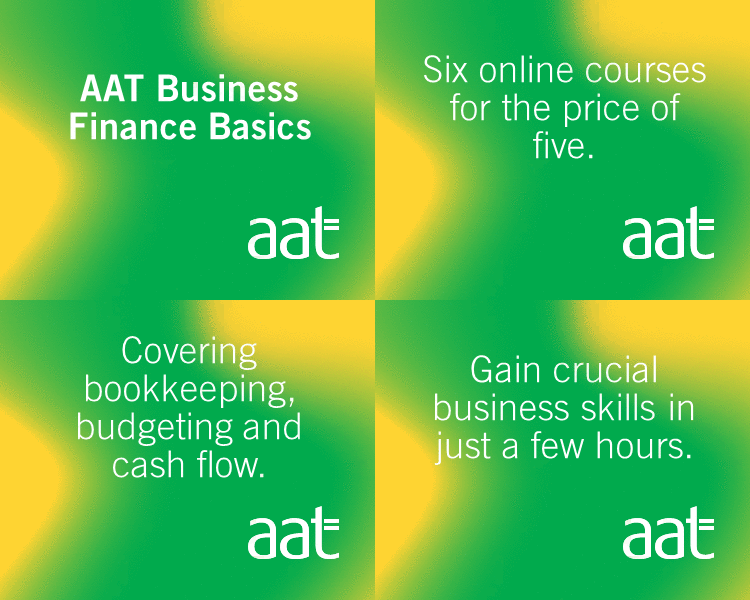
AAT Business Finance Basics

AAT Business Finance Basics are a series of online e-learning courses covering the core financial skills every business needs. They draw from AAT’s world-leading qualifications and will quickly build your knowledge on key topics including bookkeeping, budgeting and cash flow.

Visit partner's website

Register with Informi today:

  • Join over 30,000 like-minded business professionals.
  • Create your own personalised account with curated reading lists and checklists.
  • Access exclusive resources including business plans, templates, and tax calculators.
  • Receive the latest business advice and insights from Informi.
  • Join in the discussion through the comments section.

or